Toys “R” Us: Remembering a World of Toys
Toys “R” Us helped turn toy shopping into a childhood event. Explore its beginnings, Geoffrey the Giraffe, enormous selection, 2018 U.S. store closures, and the brand’s return.
Opening
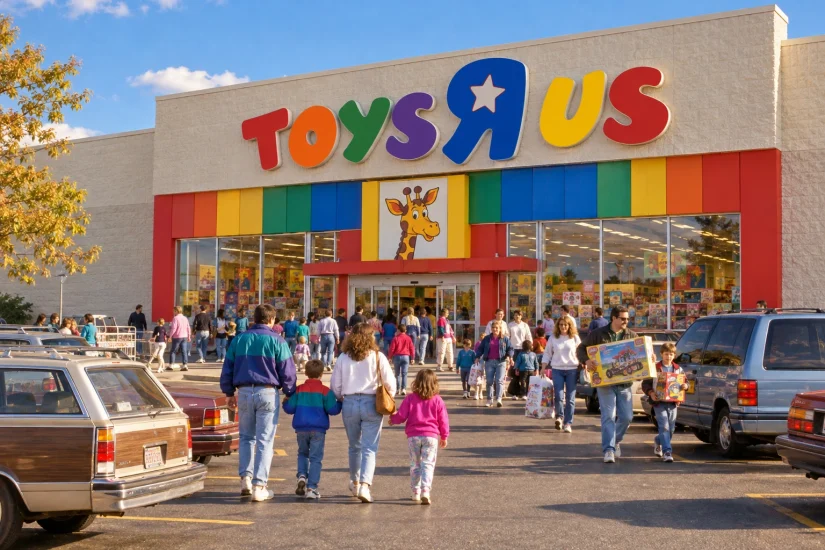
A giraffe, a backward letter, and a building filled with toys made Toys “R” Us easy to recognize.
For generations of customers, the name suggested something larger than a shopping trip: a place devoted to the things children wanted to explore. Geoffrey the Giraffe became the company’s mascot in 1965, helping give the retailer a friendly, recognizable face.
The original U.S. chain closed its remaining stores in June 2018. However, that was not the permanent disappearance of the brand. Toys “R” Us later returned through new stores and retail partnerships.
This story remembers the classic toy-store experience and traces what happened after those familiar doors closed.
At a Glance
| Detail | History |
|---|---|
| Place | Toys “R” Us |
| Also known as | Toys R Us; TRU |
| Historical location | Roots in Washington, D.C.; first Toys “R” Us toy supermarket in Rockville, Maryland |
| Category | Specialty toy retailer |
| Opened/established | Business roots in 1948; Toys “R” Us name introduced in 1957 |
| Closed/disappeared | Original U.S. chain completed its shutdown in June 2018 |
| Current status | Brand active again through stores, retail partnerships, and online channels |
| Remembered for | Geoffrey the Giraffe, colorful branding, broad toy selection, and childhood shopping trips |
The company’s annual report documents its origins. Historical reporting places the first Toys “R” Us store in Rockville, while later sources distinguish the U.S. shutdown from the brand’s revival.
How It Began
Charles Lazarus started the business in 1948 with a baby furniture store called Children’s Bargain Town in Washington, D.C.
Toys gradually became part of the business. In 1957, Lazarus introduced the Toys “R” Us name and developed a toy-focused supermarket concept in Rockville, Maryland.
That approach helped change how families bought toys. Instead of treating them mainly as seasonal merchandise, Lazarus built a business around selling them throughout the year.
The idea grew into an international retailer. Its defining attraction remained straightforward: a large store where toys were the main event.
What Made It Special
A store devoted to play
Toys “R” Us offered far more than a small toy aisle.
Its 2003 annual report described approximately 8,000 to 10,000 distinct items available year-round. The assortment included games, bicycles, books, dolls, electronic products, and educational toys.
That selection gave customers room to compare, discover, and change their minds. A child could arrive with one toy in mind and leave fascinated by something entirely different.
Geoffrey gave the brand a personality
Geoffrey the Giraffe became one of the retailer’s most recognizable symbols.
Introduced as its mascot in 1965, Geoffrey connected the store with a character rather than only a company name.
The giraffe’s presence helped make the branding feel playful. It also gave customers a familiar figure to associate with advertisements, gifts, and store visits.
Toys were available beyond the holidays
The chain’s year-round focus mattered.
A dedicated toy destination could serve birthdays, small rewards, collecting interests, and everyday curiosity. The business helped loosen the connection between toy shopping and the Christmas season.
That made the store relevant during many different moments in family life.
The shopping experience kept evolving
The familiar store layout was not identical throughout the chain’s history.
The company’s annual report describes renovations between 2000 and 2002 that widened aisles, lowered displays, and reorganized merchandise. These changes were intended to make shopping more enjoyable for adults and children.
This is why memories can differ between generations and locations. One customer may remember older warehouse-style aisles. Another may remember a later, remodeled store.
The Final Chapter
The original U.S. chain’s collapse involved financial pressure as well as changes in shopping habits.
Toys “R” Us filed for Chapter 11 bankruptcy protection in September 2017. Reuters reported that the company hoped to restructure approximately $5 billion in debt, much of it connected to a 2005 leveraged buyout.
Bankruptcy initially offered a possible route to recovery. Instead, the company changed direction in March 2018 and moved toward shutting down its U.S. business.
The remaining U.S. stores marked their final day on June 29, 2018. Reuters documented a farewell message featuring Geoffrey and an invitation for customers to continue playing.
The closure ended a familiar American retail network. It did not mean every international operation closed at the same time, nor did it permanently end the Toys “R” Us name.
What’s There Now?
The brand returned
Toys “R” Us has a later chapter.
WHP Global documents the opening of a flagship at American Dream in New Jersey in 2021, followed by 452 Toys “R” Us shops inside Macy’s stores in 2022.
In a February 2026 interview with The Toy Book, WHP executive Jamie Uitdenhowen described continued operations through flagship stores, shop-in-shops, seasonal locations, and online channels.
The revival means Toys “R” Us should be described as a brand that returned after its original U.S. chain closed.
Former stores have separate histories
A revived brand does not establish what happened to any particular old building.
Each former location needs its own research. Current property records, business listings, planning documents, and dated photographs can identify whether a building was reused, altered, or demolished.
Brand-status research checked: October 12, 2026, using the sources listed below.
Individual property status: No specific former store has been verified for this overview.
Do You Remember Toys “R” Us?
Which department did you head for first: dolls, action figures, bicycles, building sets, or video games?
Do you remember choosing a birthday gift there? Tell us which location you visited and approximately when.
Share your memories in the comments.
If you have old photographs, catalogs, receipts, advertisements, or employee materials, tell Forgotten Spots about them. Include any known dates and whether you own the material or have permission to share it.
Your contribution could help preserve the story of a particular store and the community that visited it.
Sources and Credits
- Toys “R” Us — 2003 Annual Report. Primary corporate source for the company’s origins, selection, and store renovations.
- The Independent — Charles Lazarus obituary. Historical account of Lazarus, the Rockville store, and year-round toy retailing.
- Geoffrey the Giraffe — historical overview. Supplemental reference for the mascot’s introduction.
- Reuters — “In farewell to U.S. shoppers, Toys ‘R’ Us urges ‘Play on!’”. June 29, 2018 reporting on the U.S. shutdown and financial background.
- WHP Global — Toys “R” Us retail expansion. Corporate account of the American Dream flagship and Macy’s rollout.
- The Toy Book — 2026 interview with Jamie Uitdenhowen. Dated executive account of the brand’s continuing operations.